
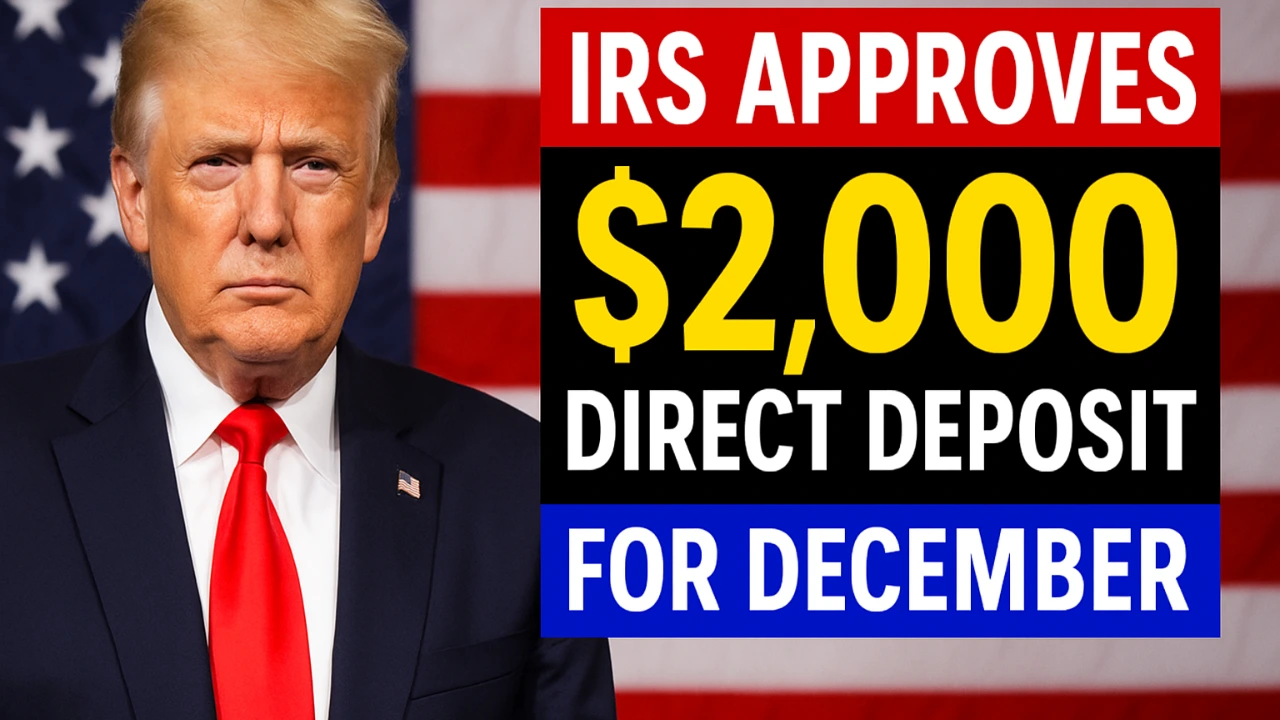
Millions of Americans are set to receive a one-time $2,000 relief payment from the Internal Revenue Service (IRS), with deposits scheduled to begin on November 18, 2025. The program is designed to help households cope with increasing living expenses, especially as winter approaches and families gear up for the holiday season.
This financial support is focused on seniors, middle-earning families, and federal benefit recipients who have been impacted by rising essential costs—including groceries, housing, energy bills, and medical care.
Key Highlights
- One-time federal support of $2,000 for eligible taxpayers
- Automatic direct deposits starting November 18, 2025
- No registration or application required
- IRS will issue payments using tax and federal benefit records
What Is the IRS $2,000 Direct Deposit Program?
The relief payment is a federal aid initiative processed by the IRS to assist Americans in managing costs triggered by inflation. This payment is not a loan, carries no interest, and does not require repayment.
Eligible recipients will be selected based on 2024 tax return data and federal benefit system records. Most payments will be delivered through direct bank deposit. For individuals without banking details linked to their IRS profile, the payment will be issued through mailed paper checks.
Who Qualifies for the Full Payment?
To receive the full $2,000 deposit, individuals must meet the criteria below:
Basic Requirements
● Be a U.S. citizen or a lawful permanent resident
● Hold a valid Social Security Number (SSN) or a Taxpayer Identification Number (TIN)
● Have filed a 2024 federal income tax return
Income Thresholds for Full Payment
| Filing Status | Max Income for Full $2,000 |
|---|---|
| Single | $75,000 or lower |
| Married Filing Jointly | $150,000 or lower |
| Head of Household | $112,500 or lower |
Taxpayers earning above these thresholds may still receive a partial payment under a phased reduction model.
Automatically Qualified Recipients
The following groups will be included automatically using federal databases—no sign-up required:
● Social Security (SSI/SSDI) beneficiaries
● Veterans Affairs (VA) benefit recipients
● Federal retirees and survivor benefit holders
Payment Timeline for November & December 2025
| Payment Method | Estimated Delivery Window | Additional Notes |
|---|---|---|
| Direct Deposits | November 18 to December 10, 2025 | Safest and fastest option |
| Federal Benefit Recipients | Late November 2025 | Included within regular benefit cycles |
| Paper Checks | Late November through December 2025 | Sent to those without bank details |
Most payments are expected to be completed by the start of December 2025.
How to Receive Your Payment Without Delays
File a 2024 Tax Return: Even non-earning individuals should file for updated records.
Verify Bank Information: Confirm your account and routing numbers via the IRS Online Account Portal.
Check Personal Details: Ensure your mailing address and profile information are current.
Stay Scam-Alert: The IRS never reaches out via calls, messages, or emails to request financial or personal information. Always rely on IRS.gov for official announcements.
Why This Payment Is Important
The one-time deposit aims to provide short-term financial ease at a time when consumer costs remain high. Many recipients plan on using the funds for core necessities, such as:
● Rent or mortgage support
● Household bills and utilities
● Medical treatment and prescriptions
● Travel, transportation, and fuel needs
Analysts believe the initiative may also help local businesses and regional economies by boosting seasonal consumer spending.
Final Thoughts
As 2025 winds down, this IRS assistance program offers crucial support for millions of Americans facing ongoing economic pressure. With no paperwork or application process involved, the key to a smooth payout lies simply in updated tax filings and accurate bank or address records.










Leave a Comment