
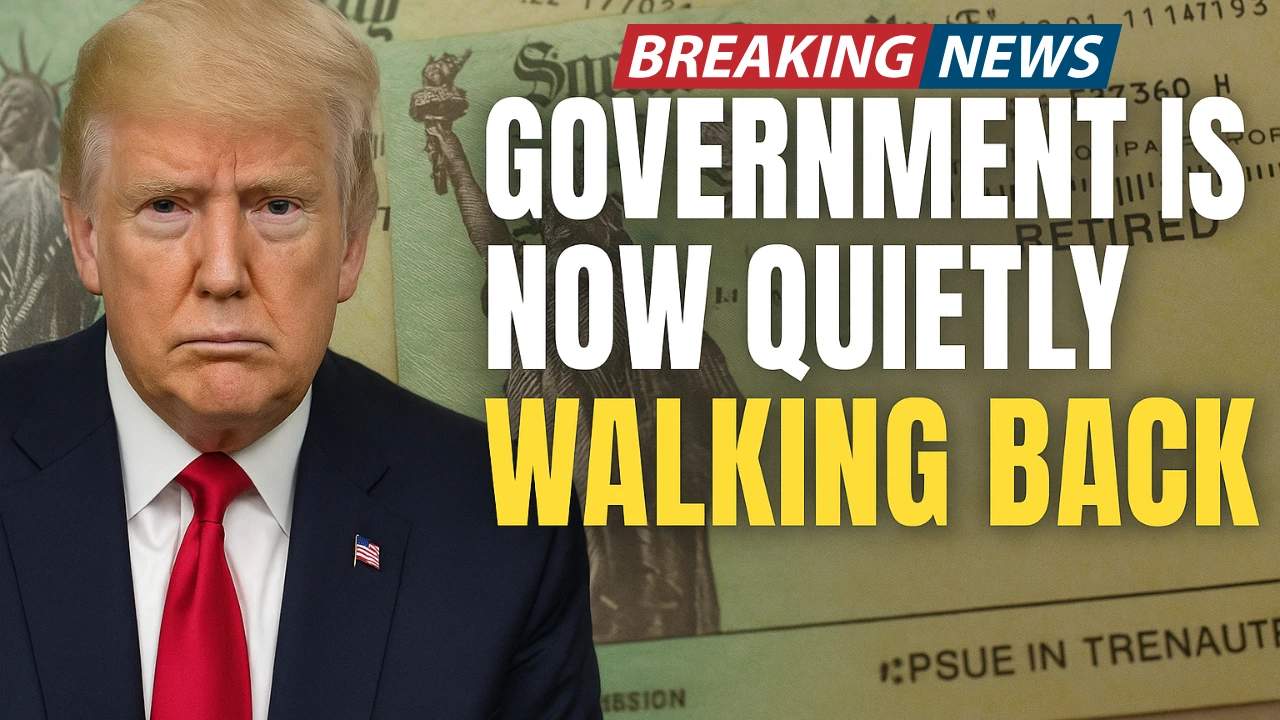
For months, U.S. Social Security beneficiaries were warned that September 30, 2025 would mark the end of an era: the last day the government would issue paper Social Security checks. The transition to fully digital payments had been framed as unavoidable, efficient, and long overdue. Yet, just days after the so-called final deadline passed, a quiet but significant shift occurred.
The U.S. government is now softly reversing course, signaling that paper checks will continue for those who genuinely have no alternative. The decision reflects growing concern about the most vulnerable seniors and disabled individuals—many of whom risked being cut off from their only source of income.
This report takes a deep look at what changed, why it changed, who is affected, and what beneficiaries should do now.
Background: The push toward digital payments
For decades, the U.S. government has encouraged Social Security beneficiaries to migrate from mailed checks to direct deposit or the Direct Express debit card. This push intensified after a March executive order by President Trump, which directed federal agencies to phase out paper checks as much as legally possible.
Why the government wanted digital-only payments
The reasoning behind the shift was straightforward:
-
Security: Paper checks are 16 times more likely to be stolen than electronic payments.
-
Fraud reduction: Electronic transfers significantly reduce counterfeit-check scams.
-
Cost efficiency: A paper check costs the government about 50 cents to produce and mail, while an electronic payment costs just 15 cents.
-
Speed: Digital deposits arrive faster, especially during weather disruptions or postal delays.
-
Administrative convenience: Millions of mailed checks translate into high processing burdens.
In short, digital payments were billed as the future. And for 99.4% of Social Security beneficiaries, that future has already arrived.
The end of paper checks… or so it seemed
By April 2025, the Social Security Administration (SSA) intensified messaging: September 30 would be the absolute final day for paper checks. Inserts were mailed with each paper check, warning beneficiaries to switch immediately. Outreach campaigns expanded through phone calls, emails, and physical letters.
The numbers were moving in the direction the agency wanted:
| Month | Beneficiaries on Paper Checks |
|---|---|
| March 2025 | 456,000 |
| September 2025 | 400,000 |
| Total SSA Beneficiaries (overall) | 69.5 million |
| % Using Electronic Payments | 99.4% |
Though the remaining paper-check recipients represented a small minority, they were not insignificant. Many belonged to extremely vulnerable groups.
Who still relies on paper checks?
Despite near-universal digital adoption, about 400,000 people were still receiving payments by mail in September 2025. These individuals typically fall into one or more of the following categories:
-
Elderly seniors (70+ years) who have never used online banking
-
People with disabilities affecting cognitive or technical ability
-
Residents of rural areas with limited internet or cell coverage
-
Low-income beneficiaries unable to meet bank account minimums
-
Individuals without proper identification required to open bank accounts
States with the largest groups
| State | Estimated Beneficiaries Still Using Paper Checks |
|---|---|
| California | 43,000 |
| Texas | 28,000 |
| Florida | 24,000 |
| New York | 18,000 |
| Pennsylvania | 15,000 |
Many of these individuals live in isolated communities where bank access is limited. For them, switching to electronic payments is not simply a matter of preference—it is a matter of physical and financial feasibility.
An advocacy group leader stated that many low-income seniors cannot maintain minimum balances, cannot pay account fees, and cannot navigate digital tools.
A vulnerable group at risk
The warnings from advocacy organizations intensified as the deadline approached.
Many seniors who rely on paper checks do so for extremely practical reasons:
-
They have no smartphone.
-
They have no internet access.
-
They do not trust or understand online banking.
-
They often cash their checks immediately at local grocery stores or community credit unions.
-
They frequently live alone and have no assistance navigating online systems.
In the words of one advocate, many recipients “lack the mental ability to navigate the world in any way other than getting a paper check and immediately cashing it.”
Transitioning these individuals abruptly, critics warned, could lead to:
-
Missed payments
-
Homelessness risk
-
Inability to purchase food
-
Confusion and fear
-
Increased fraud from people pretending to “help switch their payments”
The possibility that hundreds of thousands of vulnerable Americans might lose access to their only income source sparked what some described as “quiet panic” among senior-rights groups.
The government walks back its deadline
After months of firm messaging that paper checks would end on September 30, something unexpected happened.
Just days before the deadline, the SSA quietly updated its public guidance.
In a blog post dated September 19, the agency clarified:
-
No payments would be paused.
-
No one would be cut off.
-
Paper checks would continue for those with no other options.
This shift was subtle but major.
Key statement from the SSA
“If you have no other way to receive payments, we will continue to issue paper checks. There are no plans to pause any payments starting October 1.”
This effectively overturned the long-publicized “final deadline.”
Shortly after, an SSA finance official reinforced the message during a federal meeting, confirming that paper checks would remain available for beneficiaries who truly could not switch.
Why the government softened its stance
Although no single reason was publicly emphasized, several likely factors contributed:
1. Risk to vulnerable populations
Cutting payments to seniors who rely on paper checks would have created severe humanitarian consequences.
2. Advocacy pressure
Senior-rights groups, disability advocates, and rural-community organizations raised alarms.
3. Fear of political backlash
A wave of news stories about seniors losing their Social Security payments could have become a major political crisis.
4. Logistical concerns
Despite outreach, switching the last 400,000 beneficiaries proved harder than expected.
5. Legal limitations
The executive order allowed phasing out paper checks only “to the extent permitted by law.” Some beneficiaries may qualify for mandatory exemptions.
Ultimately, the government appears to have recognized that full elimination of paper checks—at least in 2025—was not feasible.
The system moving forward: who can still receive paper checks?
The new stance essentially creates a two-tier system:
Digital payments as the default
Most beneficiaries are expected to use:
-
Direct deposit
-
Direct Express debit card
Paper checks as an exception
Beneficiaries may continue receiving paper checks if they:
-
Have no bank account
-
Cannot manage debit cards
-
Lack access to reliable digital infrastructure
-
Have severe cognitive limitations
-
Live in remote areas with unreliable mail banking or internet
-
Receive an exemption waiver from the Treasury
The SSA will continue encouraging digital transitions but will not cut off payments for those unable to switch.
How beneficiaries can switch to electronic payments
The SSA continues to recommend switching to digital options when possible, especially for individuals who want faster deposits and stronger fraud protection.
Below is a breakdown of currently available methods:
Direct Deposit
Ideal for beneficiaries with bank or credit union accounts.
How to set it up:
-
Log in to your “my Social Security” account.
-
Enter your routing and account number.
Direct Express Debit Card
Created specifically for individuals without a bank account.
How to enroll:
-
Call 1-800-333-1795
-
Visit usdirectexpress.com
This card works like a prepaid debit card and is linked directly to monthly Social Security payments.
Waiver for exemption
For beneficiaries who cannot use electronic payments, the U.S. Treasury offers a waiver request.
Phone: 1-877-874-6347
If approved, the individual may legally continue receiving paper checks indefinitely.
Educational outreach continues
To avoid confusion, the SSA is continuing its outreach campaign.
Every paper check currently mailed includes a printed insert explaining:
-
Why electronic payments are encouraged
-
How to transition step-by-step
-
How to get help with the Direct Express card
-
How to request an exemption if needed
The agency is also contacting beneficiaries through:
-
Physical mail
-
Email
-
Automated phone calls
-
Community outreach centers
The objective is not to eliminate paper checks immediately, but to ensure that no one loses their only source of income.
What this reversal means
This policy shift carries significant implications:
More time for vulnerable individuals
Beneficiaries who rely on mailed checks will not face sudden cutoff.
Flexibility for caregivers
Children or guardians helping seniors manage finances now have a longer transition window.
Reduced panic
Worries about losing payments in October have been largely alleviated.
A hybrid future
For now, it appears that:
-
Digital payments will remain the norm
-
Paper checks will remain available for those who need them
This balanced approach may continue for years, especially as long as large populations remain offline, unbanked, or dependent on physical mail.
Table: Digital vs. Paper Payments Overview
| Payment Type | Cost to Government | Security Level | Speed | Who Should Use It |
|---|---|---|---|---|
| Direct Deposit | 15 cents | Very High | Fast | Bank account holders |
| Direct Express Card | 15 cents | High | Fast | Unbanked individuals |
| Paper Checks | 50 cents | Low | Slow | Those unable to use digital options |
The bottom line
Despite months of firm messaging, federal officials have quietly confirmed that Social Security paper checks will not end immediately. Instead, the U.S. government is taking a softer, more flexible approach—one that recognizes the practical realities faced by hundreds of thousands of seniors and disabled Americans.
The ongoing transition toward digital payments will continue, but with compassion rather than coercion. For now, paper checks remain available for those who depend on them, ensuring that no beneficiary loses access to the income that keeps them fed, housed, and financially stable.
If circumstances allow, switching to electronic payments remains the recommended option. But for those who cannot make the shift, relief has arrived: their payments will continue without interruption.
FAQs:
What was the original deadline for ending Social Security paper checks?
The government set September 30, 2025 as the final deadline to end paper checks.
Has the government ended paper checks completely?
No. The government has now softly reversed course and will continue sending paper checks to people who have no other way to receive payments.
Why did the government want to eliminate paper checks?
To reduce fraud, cut administrative costs, speed up payments, and modernize the system.
How many beneficiaries still use paper checks?
Around 400,000 people, mostly elderly or living in rural areas without internet or banking access.
Will anyone lose their Social Security payments because they couldn’t switch?
No. The SSA confirmed that no payments will be paused or stopped for those unable to transition.
Which states have the most paper-check users?
California leads with 43,000, followed by Texas with 28,000, and Florida with 24,000.











Leave a Comment